
Concise Theology
eight theses for Theology Breakfast

In this update, I’m offering a bit of my vision and approach to theological formation. As a bonus, read on to hear about my experience participating in a conference for church leaders here in Madison.
I’m looking to raise $12,500 in new giving before the end of the year, so please consider clicking the button below and giving $25-$75 per month.
Theological Formation in Campus Ministry
With you is the fountain of life; in your light, we see light. (Psalm 36:9)
It’s perhaps time for a brief explainer on why my newsletter is entitled Numen Lumen. Besides borrowing UW’s Latin motto, it has much to do with the verse just quoted.
To start, the translation: literally, numen lumen can be rendered ‘divine light’ or ‘God [is] our light.’ The point made by the phrase is straightforward, and eminently appropriate for a university motto: ‘light’ figures knowledge, and God is the source of all knowledge. If we seek illumination, we should begin by seeking God.
The conviction that this is the case is what motivates my theological approach to campus ministry. The same God who is the fountain, the source of life, is the light that illuminates our minds so that we can know the truth.
In a secular public research university, knowledge is of course central to the institution’s purpose, and a prime value. Yet students may not always grasp the necessity of a frame for organizing knowledge, or realize the ultimate source of their knowledge. Among Christian students, involvement in a campus ministry may help them learn the Bible and how to share the gospel with their friends and neighbors, but the focused nature of these organizations limits their capacity to critically reflect on deeper, underlying realities.
That’s why I’m focused on theological formation. I’m convinced that students need attentive pastoral care and deeply theologically-informed discipleship to be well-equipped members of Christ’s church and agents of God’s kingdom. For my work, that means focusing on three core values:
Biblical Wisdom: helping students understand Scripture holistically
When we study Scripture, we begin with the way the words go and follow all the way to Christ who is their Author and subject (Lk 24:27). The Bible is a grand story from creation to consummation, and we keep that frame in view.
Theological Vision: training students to see the world theologically
Theology is for formation, not information. We want to see all of life as it relates to God, becoming people who habitually ask the question: What difference does God make here? (Col 3:17)
Ecclesial Charity: encouraging students to love others wholeheartedly
Where there is division and isolation, Christian love comes as medicine. We treat others with respect and kindness, even where there is deep disagreement, because this charity has first been poured into us (Rom 5:5).



The Shape of Theological Formation
I’ve written often about Theology Breakfast, but I thought it might be helpful to give a clearer picture of what gets taught and the approach I take. I’ll begin with Eight Theses that cover our basic curriculum in less than 20 sentences:
Who is God: Theology and Trinity
The source and only satisfaction of our deepest longing is the God who is infinite and eternal, holy and good, eternally existing as Father, Son, and Holy Spirit. To share in that loving fellowship is our highest good.
Knowing God: Revelation and Scripture
Grasping so transcendent a reality requires communication, and God graciously meets us in his world and through his word, coming down to us in such a way that we can truly know him.
Made by God: Creation and Providence
Everything we know did not have to exist, but is lovingly made to be and to be held in being by our wise Creator. He so perfectly orders all things that everything works according to his purposes.
Called by God: Humanity and Vocation
Humans are not like other animals, but are body/soul creatures made from dust and destined for glory as the Creator’s vice-regents. We enact this glorious vocation through ordinary means like work and relationships.
Fallen from God: Sin and Evil
In a tragedy far beyond comprehension, humans have abdicated their vocation and rebelled against the God who loves them. Sin is irrational and powerful, but not ultimate.
Redeemed by God: Christ and Salvation
God in his grace has come to our rescue, bearing our own flesh to perfect his purposes for us. In him, we are forgiven and freed to be made new.
Gathered by God: Church and Sacraments
Those in Christ are never alone in him, but have been united forever to his body, the church. As further evidence of his abundant generosity, God gives signs and seals of his goodness to us in the sacraments of baptism and Eucharist.
Welcomed by God: Death and Eternity
Our final end is not the End with a capital ‘E’. Rather, death has become for us a door into infinite blessedness, a life fully realized when our Redeemer becomes our Husband and all of creation is finally and fully healed.
Roughly speaking, these eight theses get covered through a course of Scripture study, historical investigation, dogmatic summary, and prayerful discussion. Each meeting begins and ends in prayer, first according to a common liturgy, then with a brief applicatory prayer. No topic remains in the abstract, but is always brought to bear on the lives of students as they really are. This is why our motto for Theology Breakfast is deep devotional doctrine.
Church for a Post-Christian Culture
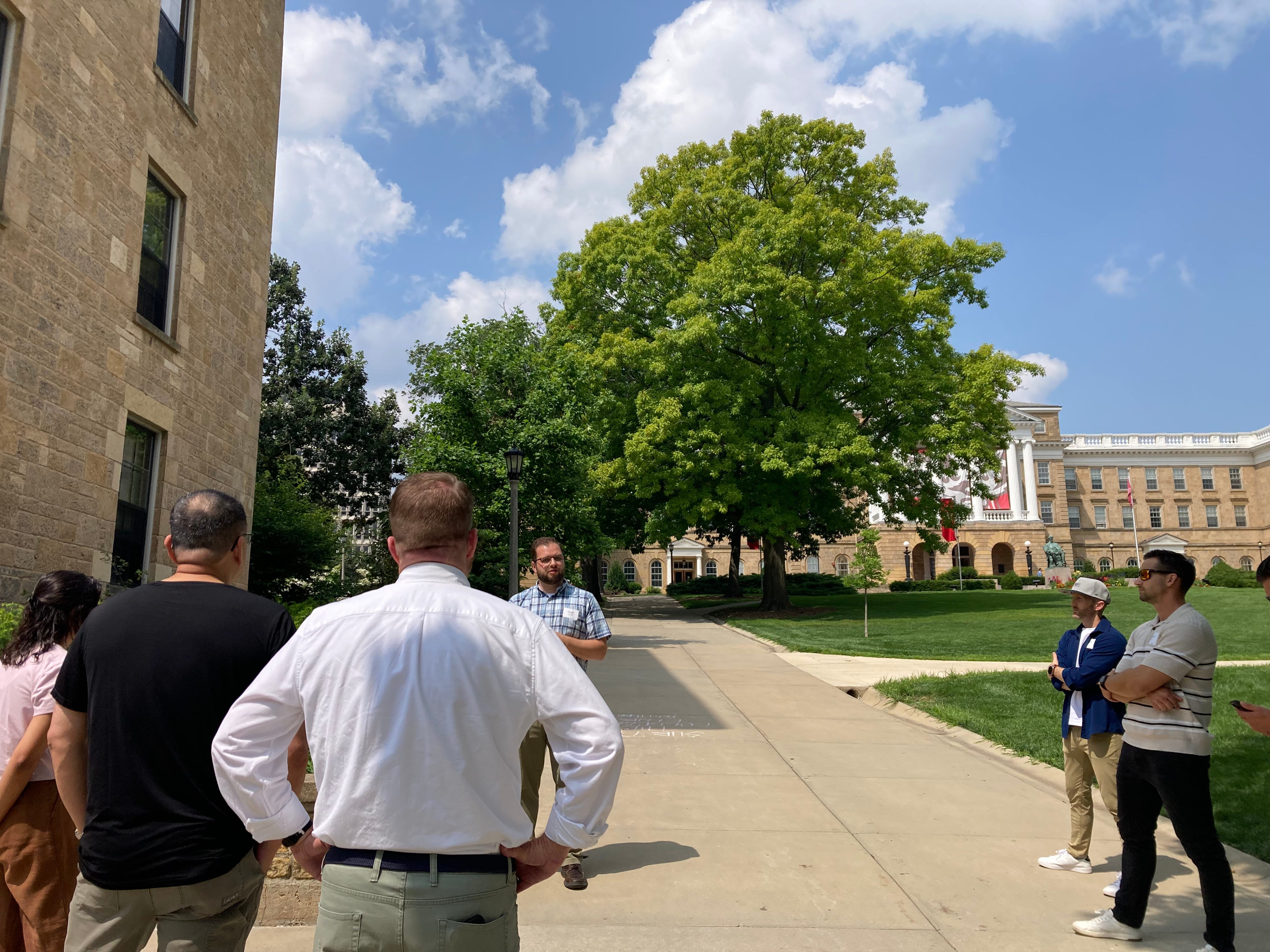
At the beginning of August, I was delighted to be invited to participate in a seminar (hosted by the Steve and Laurel Brown Foundation and funded by the John Templeton Foundation) entitled Church for a Post-Christian Culture. The plenary speaker and chief interlocuter was Dr. Gavin Ortlund, a fellow Covenant Seminary alumnus and author of the book Why God Makes Sense in a World That Doesn’t: The Beauty of Christian Theism. Gavin’s work on YouTube has been helpful for me as a campus pastor — students welcome the chance to learn about various questions in an accessible format — and I’ve used his recent book What It Means to be Protestant with a couple of students.
The overall theme of the seminar was how to communicate the gospel in an age like ours, where dechurching and disenchantment have seemed to bottom out and there is an increasing sense of spiritual curiosity and interest. One of the main arguments we came to was that the beauty and goodness of Jesus needs to be communicated clearly and frequently. Apart from a sense of wonder at the world and at the glorious beauty of God in Christ, our apologetic will often fall flat.
It was an incredible joy to participate in this seminar, not only for the topics discussed but also for the friendships that were sparked through these days together. Surrounded by more experienced pastors (including local pastors, an Anglican bishop, and other ministry leaders from around the country), I was all the more honored to have been a part of it. After so rich a conversation, I am even more excited for the start of the semester in just a few short days!


Prayer
To close, please pray for this upcoming academic year. Pray for the new grad students (six of which I’ve met in the past week at Geneva!) and undergrad students; pray for them to develop deep friendships and community, and for me to be a faithful pastor to them.
Pray for returning students to gain greater clarity about their vocation, to be energized for another year of study, and to reach out to others with the love of Christ.
Pray for this campus ministry: that it would reach doubters and disciples alike with the gospel of Christ and a deeper understanding of God’s loving work on their behalf. Pray for financial provision as we seek to reach new goals, and for solid cohorts of friends and mentors to keep me and other leaders encouraged and sustained in the work.
Grace and peace,
Evan